Skip to content

Choate Island Forest Clearing Project

No Close
1. Massachusetts Environmental Trust Grants (FY2016) includes partner project in Boxford
2. Stream Continuity and Infrastructure Assessment Project Update
3. Great Marsh Awarded Federal Wetlands Grant
4. Marsh Adaptation Strategy Tool (MAST)
5. King Tides and Sea Level Rise
6. MyCoast Tracks Coastal Storms
7. PIE Rivers Annual Meeting Promotes the Power of Partnerships
8. New Flooding and Sea Level Rise Maps Aid Resiliency Planning Efforts
9. Essex Tech Students Study Plum Island Beach Movement
10. COAST Analysis of Newburyport
11. Planning Partners Report Progress
12. Ipswich River Re-opens to Shellfishing
13. Partners remove over 600 tires during “Turtle Land” cleanup
14. Greenbelt One Step Closer to Protecting Leonhard-Eldred Farm
15. Native Plantings and Sand Fencing Help Beach Dune Restoration
16. Improved fish ladder proposed for Willowdale Dam
17. Dune Resiliency Efforts on Salisbury Beaches
18. EPA Releases Stormwater Permit
19. Greenbelt Steps Closer to Conserving Sagamore Hill
20. Ipswich High Students Explore Sea Level Rise
21. PIE-Rivers Partners Gather for Great Marsh Resiliency Modeling Workshop
22. Communities Plan for Living Shorelines
23. Local Students Give Presentations on Sea Level Rise and Storm Surge Impacts
24. Partner efforts help river herring upstream
25. Communities Take Action on Resiliency
26. Survey Work Begins at Ipswich Mills Dam
27. Town of Ipswich Receives Coastal Resiliency Grant
28. Ipswich Dam Team Visits Exeter Restoration Project
29. Nanotags: Understanding large landscape connections using nano-technology
30. Coastal Resiliency Planning Project Works on Solutions
31. PIE-Rivers Partnership Annual Meeting 2016
32. Great Marsh Sea Level Rise Symposium: Implications for Quality of Life in Our Communities
33. Greenbelt Hosts Inaugural Essex County Open Space Conference
34. Salt Marsh Science Project Celebrated 20th Anniversary
35. 2016 PIE-Rivers Annual Meeting
36. EPA Releases Dam Removal FAQ
37. Choate Island Forest Clearing Project
38. Partners Protect Castle Neck Headwaters
39. Wenham and Boxford receive DER assistance to upgrade degraded culverts
40. PIE-Rivers Partnership Annual Meeting 2017
41. PIE-Rivers Partners Celebrate 2017 Accomplishments
42. The Great Marsh Coastal Adaptation Plan Is Now Online

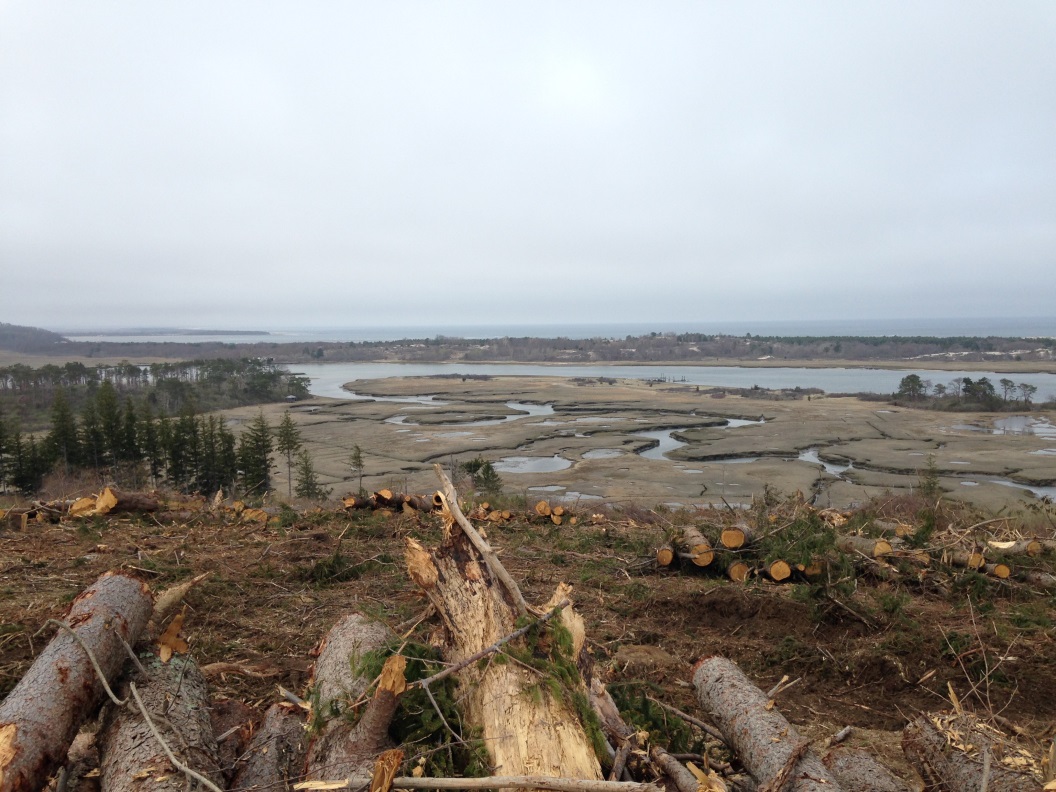
The Trustees, in conjunction with the Massachusetts Division of Fisheries and Wildlife and with funding from the North American Wetland Conservation Act (NAWCA) and the Wildlife Management Institute, have cleared 30 acres of old spruce plantation on Choate Island at the center of the Essex River Estuary for shrubland and young forest habitat.   

When Richard T. Crane, Jr. acquired the property in 1917 as part of the Crane Estate, the island had been logged for timber, farmed, and grazed for over 200 years.  His son, Cornelius, later planted 95 acres of spruce and pine forests on Choate Island. The most common tree planted was Norway spruce, a species native to Europe.

In recent years severe storms have leveled almost half of the nearly 100 year old forest.  These blowdowns prevent access by blocking roads and trails and frequently result in surface disturbance as soil and rocks are uprooted.  Furthermore, since the Norway spruce are not reproducing, invasive plants are benefiting greatly from this disturbance and bittersweet, porcelain berry and morrows honeysuckle have dominated blowdown areas.  The projection is for the rest of this forest to blowdown with climate change adding to the intensity and frequency of storms.  

To prevent further blowdowns, and the legacy they leave behind, the Trustees have proactively removed 30 acres of the planted forest on the northern half of the island. In turn, this will benefit many species of conservation concern including the American black duck through the creation of shrubland habitat near the salt marsh. Other species that will benefit include smooth green snake, American woodcock, Eastern towhee, native pollinators and fall migrating birds as they stop to feed on the abundant fruit that will be produced as native plants become established.

By Russ Hopping, Ecology Program Director for the Trustees

Comments (0)

Leave a Reply

Your email address will not be published. Required fields are marked *

Back To Top